CATTI-题库-真题-模拟-课程-直播
 国新办
国新办
 2025-12-03

 1012次
1012次
新时代的中国军控、裁军与防扩散
China’s Arms Control, Disarmament, and Nonproliferation in the New Era
中华人民共和国国务院新闻办公室
The State Council Information Office of the People’s Republic of China
2025年11月
November 2025
目录
Contents
前言
Preface
一、国际安全和军控形势复杂严峻
I. Grim Realities: International Security and Arms Control
二、新时代中国军控的政策立场
II. Position and Policies: China’s Arms Control in the New Era
三、建设性参与国际军控进程
III. Playing a Constructive Role in International Arms Control
四、引领新兴领域国际安全治理
IV. Leading International Security Governance in Emerging Fields
五、加强防扩散与和平利用科技国际合作
V. Strengthening International Cooperation on Nonproliferation and Peaceful Uses of Science and Technology
结束语
Conclusion
前言
Preface
和平与发展是人类社会永恒的主题。和平需要争取,和平需要维护。
Peace and development are eternal themes of human society. Peace needs to be fought for and be upheld.
军控、裁军与防扩散,寄托着人类铸剑为犁、干戈载戢的美好夙愿,承载着降低战争风险、消除安全赤字、促进世界和平的重要使命,关乎全球战略安全与人类共同福祉,日益成为国际社会共同期待。
Arms control, disarmament, and nonproliferation embody humanity’s aspiration to turn swords into plowshares and lay down their weapons. They represent important missions of mitigating the risk of war, addressing the security deficit, and promoting global peace. Together, these efforts are vital to global strategic security and the shared wellbeing of humanity, and have gradually become a common expectation of the international community.
中华民族历来崇尚“以和为贵”“协和万邦”,坚守正义之道,反对恃强凌弱与穷兵黩武。中华人民共和国成立以来,始终坚持走和平发展道路,坚定奉行防御性国防政策,坚决反对任何形式的霸权主义、侵略扩张和军备竞赛。中华人民共和国恢复在联合国合法席位后,积极参与多边军控进程,为维护国际和平与安全作出不懈努力。
The Chinese nation has always cherished peace and harmony among nations, upheld justice, and opposed abuse of the weak by the strong and excessive use of force. Since the founding of the People’s Republic of China (PRC) in 1949, it has pursued a path of peaceful development and a national defense policy that is defensive in nature, and firmly opposed all forms of hegemony, aggression, expansion, and arms race. After the restoration of its lawful seat in the United Nations (UN) in 1971, China has actively participated in multilateral arms control and made unremitting efforts to safeguard international peace and security.
进入新时代,在习近平新时代中国特色社会主义思想指引下,中国坚定不移推进中国式现代化建设,积极顺应国际社会共同呼声,践行全球发展倡议、全球安全倡议、全球文明倡议、全球治理倡议,推动构建人类命运共同体。中国建设性参与国际军控、裁军与防扩散进程,积极贡献中国倡议、中国方案,致力于改善国际安全环境,增进国际安全合作,破解国际安全困境,完善全球安全治理。中国始终是世界和平的建设者、全球发展的贡献者、国际秩序的维护者。
In the new era, guided by Xi Jinping Thought on Socialism with Chinese Characteristics for a New Era, China is committed to advancing Chinese modernization, puts into action the Global Development Initiative, Global Security Initiative, Global Civilization Initiative, and Global Governance Initiative, and works to build a community with a shared future for humanity in response to the shared aspirations of the international community. It plays a constructive role in international arms control, disarmament, and nonproliferation, actively offers its initiatives and solutions, and is committed to improving the international security environment, increasing international security cooperation, addressing global security challenges, and strengthening global security governance. China has been and will always be a builder of world peace, a contributor to global development, and a defender of the international order.
2025年是中国人民抗日战争暨世界反法西斯战争胜利80周年,也是联合国成立80周年。和平依然脆弱,战争并未消弭,局部冲突和动荡频发,国际军备竞赛持续升级。人类又面临和平还是战争、对话还是对抗、共赢还是零和的抉择,又一次站在历史的十字路口,迫切需要重振多边军控进程,筑牢和平发展之基。
The year 2025 marks the 80th anniversary of the victory of the Chinese People’s War of Resistance Against Japanese Aggression and the World Anti-Fascist War. It is also the 80th anniversary of the founding of the UN. Peace remains fragile while wars persist, regional conflicts and turmoil are becoming more frequent, and the international arms race continues to escalate. Today, humanity again has to choose between peace and war, dialogue and confrontation, win-win cooperation and zero-sum game. It once again finds itself at a historic crossroads. As such, there is an urgent need to reinvigorate multilateral arms control and consolidate the foundation for peaceful development.
为全面阐释新时代中国军控、裁军与防扩散的政策实践,介绍外空、网络、人工智能等新兴领域国际安全治理主张,展现中国维护世界和平与安全的坚定决心,呼吁世界各国携手推进国际军控进程,中国政府特发布此白皮书。
The Chinese government is publishing this white paper to comprehensively present China’s policies and practices on arms control, disarmament, and nonproliferation, and its position on security governance in emerging fields such as outer space, cyberspace, and artificial intelligence (AI), to restate its commitment to safeguarding world peace and security, and to call on countries around the world to work together for international arms control.
一、国际安全和军控形势复杂严峻
I. Grim Realities: International Security and Arms Control
当今世界,国际战略格局加速调整,国际力量对比朝着更加均衡方向发展,多边主义深入人心,维护世界和平与安全的积极因素上升。同时,全球安全形势复杂严峻,霸权主义、强权政治、单边主义严重冲击战后国际秩序,地缘政治博弈加剧,局部冲突和动荡频发,军备竞赛升温。国际军控、裁军和防扩散的综合性复杂性更加突出,机遇与挑战并存。
In today’s world, the international strategic landscape is evolving at an accelerating pace, the global balance of power is shifting towards greater equilibrium, multilateralism is valued, and factors safeguarding world peace and security are on the rise. At the same time, the global security situation is complicated and menacing: Hegemonism, power politics, and unilateralism pose a severe threat to the post-war international order; geopolitical rivalry is intensifying; regional conflicts and unrest are becoming more frequent; and the arms race is escalating. Concurrently, issues related to international arms control, disarmament, and nonproliferation are becoming more complex and multidimensional. Overall, the situation presents both opportunities and challenges.
大国竞争冲击地区和平与安全。个别国家谋求绝对战略优势,持续扩军备战,挑动阵营对抗,加剧国际和地区军备竞赛,导致地区冲突多点爆发,全球军费开支屡创新高。特别是在亚太地区,强化军事同盟,推动“延伸威慑”,前沿部署陆基中程导弹,制造紧张对立,严重损害地区国家安全利益。
Competition between major countries is impacting regional peace and security. A certain country seeks absolute strategic superiority by constantly expanding its armaments, strengthening combat readiness, and provoking bloc confrontation. This has led to escalated international and regional arms race, outbreaks of regional conflicts at multiple spots, and repeated new highs in global military expenditures. In particular, this country has strengthened military alliances in the Asia-Pacific region, exercised extended deterrence, and forward-deployed ground-based intermediate-range missiles, provoking tension and opposition and severely undermining the security and interests of countries in the region.
全球战略稳定面临严重威胁。个别国家持续调整核政策,顽固维持庞大核武库,提升核威慑和实战能力,加剧全球核冲突风险。导弹防御技术不断提升,外空、网络、人工智能等新兴领域军事应用快速发展,正在改变传统战略攻防格局,给全球战略稳定带来新冲击。
Global strategic stability faces severe threats. This certain country keeps adjusting its nuclear policies, stubbornly maintaining a massive nuclear weapons stockpile while further reinforcing its nuclear deterrence and war-fighting capabilities. This has resulted in rising risks of global nuclear conflicts. Meanwhile, missile defense technologies are advancing rapidly, and military applications in emerging fields such as outer space, cyberspace, and AI are developing at a fast pace. All these factors are reshaping the traditional strategic offense-defense dynamic, posing new challenges to global strategic stability.
国际军控、裁军和防扩散体系受到侵蚀。个别国家退群毁约,破坏国际军控体系。国际防扩散机制深受实用主义和双重标准危害,少数国家构筑“小院高墙”、大搞“脱钩断链”,以防扩散为名限制发展中国家和平利用科技权利。
The international arms control, disarmament, and nonproliferation regimes are eroding. This certain country has undermined the international arms control regime by withdrawing from relevant international agreements. The international nonproliferation regime has suffered from pragmatism and double standards. A handful of countries, driven by a “small yard with high fences” mentality, pursue decoupling, sever industrial and supply chains, and restrict developing countries’ peaceful use of science and technology in the name of nonproliferation.
新兴领域安全风险与挑战日益突出。随着新兴科技快速发展应用,技术失控、数据窃密、科技犯罪、伦理失范等风险上升,国际规则缺失和治理体系滞后问题凸显。新兴领域军事化进程加快,冲击传统交战法则和战争伦理,带来新的全球性安全挑战。
Security risks and challenges in emerging fields are becoming more prominent. With the rapid development of emerging technologies, uncontrolled use of technologies, data theft, technological crimes, and violation of ethics are on the rise. These issues highlight the absence of international rules and the lag in governance systems. The militarization trend in emerging fields is accelerating. This is destabilizing traditional principles of warfare and war ethics and posing new challenges to global security.
加强军备控制的和平正义呼声高涨。全球南方国家在国际安全与发展事务中的自主性上升,推动构建公平、公正、合理的国际军控体系,维护世界和平稳定的力量不断壮大。中国坚定维护以联合国为核心的国际军控体系,积极推动完善全球安全治理,是推进国际军控进程的重要力量。
Rising calls for stronger arms control are in essence calls for peace and justice. The Global South is achieving greater autonomy in addressing global security and development affairs. The drive to promote a fair, just and reasonable international arms control regime and to safeguard world peace and stability is growing stronger. China is committed to upholding the international arms control regime with the UN at its core. It actively promotes sound global security governance and serves as a key promoter of international arms control.
二、新时代中国军控的政策立场
II. Position and Policies: China’s Arms Control in the New Era
新时代的中国军控、裁军与防扩散政策,基于以和为贵的文化传统、社会主义的国家性质、和平发展的战略抉择。中国致力于推进军控领域全球治理,支持建立持久和平与普遍安全的世界。
China’s policies on arms control, disarmament, and nonproliferation in the new era are based on its cultural tradition of harmony, its socialist nature, and its strategic commitment to peaceful development. China works to promote global governance in arms control and supports all efforts to build a world of lasting peace and common security.
推动构建人类命运共同体。人类是命运共同体,也是不可分割的安全共同体。维护世界和平与安全,促进全球战略平衡与稳定,是军控、裁军与防扩散的重要使命,也是构建人类命运共同体的应有之义。新时代的中国军控,始终秉持全人类共同价值,积极回应各国正当合理的安全关切,致力于推动构建相互尊重、公平正义、合作共赢的新型国际关系,共同建设持久和平、普遍安全、共同繁荣、开放包容、清洁美丽的世界。
Building a community with a shared future for humanity. Humanity is both a community with a shared future and an indivisible security community. Safeguarding world peace and security and promoting global strategic balance and stability are key missions of arms control, disarmament, and nonproliferation, and also an inherent part of building a community with a shared future for humanity. China has always upheld the common values of all humanity in its arms control endeavors in the new era, and has actively responded to the legitimate and reasonable security concerns of all countries. It is committed to building a new type of international relations characterized by mutual respect, fairness, justice, and win-win cooperation, and working together with other countries to build an open, inclusive, clean and beautiful world of lasting peace, universal security, and shared prosperity.
积极践行全球安全倡议。全球安全倡议旨在消弭国际冲突根源、完善全球安全治理,为解决当前人类社会面临的安全挑战贡献了中国智慧、中国方案。新时代的中国军控,始终秉持团结精神和共赢思维,积极践行共同、综合、合作、可持续的安全观,将是否有利于促进全球战略稳定,有利于营造公道正义、共建共享的安全格局作为政策着眼点,统筹考虑军控对战略平衡与稳定的促进作用,着力发挥维护安全与限制战争的功能,建设性推进国际军控进程。
Actively promoting the Global Security Initiative. This initiative seeks to address the root causes of international conflicts and strengthen global security governance. It offers China’s vision and solutions to the security challenges confronting humanity. Founded on a spirit of solidarity and a win-win mindset, China’s arms control in the new era manifests a vision of common, comprehensive, cooperative and sustainable security. The focus of its policies is whether they can strengthen global strategic stability and contribute to a fair and just security architecture built by all and for the benefit of all. China will take a holistic view towards the role of arms control in promoting strategic balance and stability, perform its functions in safeguarding security and curbing wars, and constructively advance international arms control.
坚定奉行防御性国防政策。防御性国防政策是中国国防和军队建设的基本准则,决定了新时代中国军控政策的基本立场。中国坚持走和平发展道路,永不称霸、永不扩张、永不谋求势力范围。坚持防御、自卫、后发制人原则,坚定维护国家主权、安全、发展利益。中国坚持走中国特色强军之路,从不参加任何形式的军备竞赛,中国军队的发展壮大始终是世界和平力量的发展壮大。
Firmly pursuing a national defense policy that is defensive in nature. This policy is the fundamental guideline for China’s national defense and military development. It defines the basic position of the country’s arms control policy in the new era. China remains committed to peaceful development and will never seek hegemony or expansion, or seek to build spheres of influence. Founded on commitments to defense, self-defense, and striking only after being attacked, China is resolute in safeguarding its sovereignty, security, and development interests. It stays committed to the Chinese path to building a strong military and never engages in any form of arms race. A stronger Chinese military always adds strength to the world’s peaceful forces.
保持公开透明、合理适度的国防支出。中国坚持国防建设和经济建设协调发展方针,合理确定国防支出规模。与美国等军事大国相比,中国的国防支出无论是占国内生产总值的比重、占国家财政支出的比重,还是国民人均国防支出、军人人均国防支出等都是比较低的。中国积极参加联合国军费透明制度,预算规模、结构、基本用途等都公开透明。自2007年起,每年向“联合国军事开支标准报告制度”提交上一财政年度军事开支报告。
Maintaining open, transparent, reasonable and appropriate national defense spending. China determines its defense expenditure at a reasonable level in accordance with the policy of coordinating development in national defense and economic growth. Compared with the United States and other countries with a strong military, China’s defense spending remains relatively low in terms of its share of GDP, as a proportion of total fiscal expenditure, and on both a per capita and per-service-member basis. China actively participates in the UN’s transparency mechanisms on military expenditures, and ensures transparency regarding the scale, structure, and fundamental purposes of its military budget. Since 2007, it has submitted annual reports on its military expenditures for the previous fiscal year to the UN Report on Military Expenditures.
秉持公正、合作、平衡、有效的军控理念。中国坚持公平正义,始终根据事情本身的是非曲直决定立场和政策,坚定维护以联合国宪章宗旨和原则为基础的国际关系基本准则,公正、合理、非歧视地处理国际军控与防扩散问题,反对政治胁迫、例外主义和双重标准。坚持合作共赢,倡导真正的多边主义,推动平等互利国际合作,通过政治和外交手段实现军控与防扩散目标。坚持综合平衡,兼顾传统与新兴领域,标本兼治、综合应对全球安全挑战,统筹处理错综复杂的军控事务;尊重各国基本权利与发展需要、平衡防扩散与和平利用,反对泛化国家安全概念、滥用出口管制措施、限制发展中国家和平利用和正当发展权利。坚持务实有效,坚定维护国际军控与防扩散体系权威性、普遍性和有效性,以各方均能接受的方式理性务实、循序渐进地推动国际军控和防扩散进程,反对抛开联合国平台“另起炉灶”。
Upholding the principles of justice, cooperation, balance and effectiveness in arms control. China is committed to fairness and justice. It considers issues on their own merits and decides its position and policies accordingly. China firmly safeguards the basic norms governing international relations based on the purposes and principles of the UN Charter, addresses international arms control and nonproliferation issues in a just, reasonable and nondiscriminatory manner, and opposes political coercion, exceptionalism, and double standards.
China advocates win-win cooperation, true multilateralism, and equal and mutually beneficial international cooperation. It seeks to achieve arms control and nonproliferation objectives through political and diplomatic means.
China maintains an overall balance in its approach, emphasizing both conventional and emerging fields. It addresses both the symptoms and root causes of global security threats in a comprehensive manner while coordinating the handling of complex arms control issues. It respects the fundamental rights and development needs of all countries and strives to balance nonproliferation and peaceful utilization. It opposes abusing the concept of national security and export control measures, and exerting restrictions on developing countries’ rights to peaceful uses and legitimate development.
China pursues practical and effective results, and resolutely upholds the authority, universality and effectiveness of international arms control and nonproliferation regimes. It advances international arms control and nonproliferation processes in a rational, practical and step-by-step manner acceptable to all parties, and rejects attempts to replace the UN platform.
深度参与军控领域全球治理。新时代中国军控坚持共商共建共享的全球治理观,主张加强团结协作,反对单边主义,坚定维护联合国地位和权威,切实发挥联合国在全球治理中不可替代的重要作用,倡导建设更加包容的治理框架、更加有效的多边机制、更加积极的国际合作。中国已批准或签署20多个多边军控条约,认真履行条约义务。全面深入参与联合国大会裁军与国际安全委员会(联大一委)、联合国裁军审议委员会(裁审会)、日内瓦裁军谈判会议(裁谈会)等军控机制会议和活动,支持尽早召开第四届裁军特别联大,为维护和加强以联合国为核心的多边机制作出贡献。中国积极开展军控、裁军和防扩散领域国际合作,加强双多边沟通交流,与20多个国家和国际组织建立了军控与防扩散磋商机制,增进理解互信。
Extensively engaging in the global governance of arms control. In the new era, China’s approach to arms control is guided by the vision of global governance characterized by extensive consultation and joint contribution for shared benefit. China calls for stronger solidarity and cooperation, opposes unilateralism, firmly upholds the status and authority of the UN, and supports the UN in playing an indispensable role in global governance. It advocates for a more inclusive governance framework, more effective multilateral mechanisms, and more proactive international cooperation. It has ratified or signed over 20 multilateral arms control treaties and strictly complies with their obligations.
China has been fully and deeply involved in meetings and activities under the arms control mechanism, including those hosted by the Disarmament and International Security (First Committee) of the UN General Assembly, the UN Disarmament Commission (UNDC), and the Conference on Disarmament in Geneva (CD); it also supports the early convening of the Fourth Special Session of the UN General Assembly Devoted to Disarmament. All these have contributed to safeguarding and strengthening UN-centered multilateral mechanisms.
China also promotes international cooperation in arms control, disarmament, and nonproliferation, and facilitates bilateral and multilateral exchanges. It has established arms control and nonproliferation consultation mechanisms with over 20 countries and international organizations to foster mutual understanding and trust.
三、建设性参与国际军控进程
III. Playing a Constructive Role in International Arms Control
中国作为联合国安理会常任理事国,积极维护国际军控机制的权威性和有效性,建设性参与核、生物、化学等领域多边军控进程,认真履行国际军控条约,为国际军控事业作出了应有的贡献。
As a permanent member of the UN Security Council, China has actively safeguarded the authority and effectiveness of the international arms control regime, played a constructive role in multilateral arms control in the nuclear, biological, chemical and other fields, and conscientiously performed its duties prescribed by international arms control treaties, making its due contribution to international arms control.
(一)核军控
1. Nuclear Arms Control
核武器是悬在人类头上的“达摩克利斯之剑”,核军控是维护全球战略稳定的重要保证,事关人类安全与发展利益。当前,全球核博弈形势严峻复杂,核军备竞赛风险上升,核军控面临挑战。中国多次重申,核武器用不得、核战争打不得。从拥有核武器第一天起,中国就倡导全面禁止和彻底销毁核武器,承诺在任何时候和任何情况下不首先使用核武器,无条件承诺不对无核武器国家和无核武器区使用或威胁使用核武器。中国坚定维护国际核裁军和核不扩散体系,忠实履行《不扩散核武器条约》各项义务,努力促进条约平衡推进核裁军、防止核武器扩散、促进和平利用核能三大目标。
Nuclear weapons are the sword of Damocles hanging over the head of humanity. Nuclear arms control is an important guarantee of global strategic stability and is integral to the security and development interests of all. Currently, nuclear arms control is facing challenges, as global nuclear strategic rivalries are becoming more intense and complex, and the risk of a nuclear arms race is growing.
China has reiterated on numerous occasions that nuclear weapons must never be used and that a nuclear war must never be fought. From the day it came into possession of these weapons, China has advocated their complete prohibition and thorough destruction. China has always remained committed to the principle of no-first-use of nuclear weapons at any time and under any circumstances, and unconditionally undertakes not to use or threaten to use nuclear weapons against non-nuclear-weapon states or nuclear-weapon-free zones.
China has resolutely safeguarded the international nuclear disarmament and nonproliferation regimes, fulfilled its obligations to the Treaty on the Non-Proliferation of Nuclear Weapons (NPT) and promoted balanced progress in the Treaty’s three pillars – nuclear disarmament, nonproliferation, and peaceful uses of nuclear energy.
1.核政策
(1) Nuclear policy
坚定恪守不首先使用核武器政策,坚持自卫防御核战略。中国发展核武器是在特殊历史时期为应对核威胁与核讹诈、打破核垄断、防止核战争被迫作出的战略性选择,不是为了威胁别国,而是为了防御和自卫。中国从未动用核武器威胁任何国家,从未在外国领土上部署核武器,不为别国提供核保护伞。无论是数次面临核威胁、核讹诈的冷战时期,还是面临复杂国际安全形势和严峻战略安全威胁的今天,中国始终恪守不首先使用核武器政策,仍然坚定奉行自卫防御核战略,推动核力量现代化旨在保障国家战略安全,维护全球战略稳定。这一政策立场在所有核武器国家中最具稳定性、连续性和可预见性,是中国对国际核军控事业的重大贡献。
Upholding a firm commitment to a policy of no-first-use of nuclear weapons and a nuclear strategy of self-defense. China was compelled to make the strategic choice to develop nuclear weapons at a particular point in history to deal with nuclear threats and blackmail, break the existing nuclear monopoly, and prevent nuclear wars. China’s nuclear weapons are not intended to threaten other countries, but for defense and self-protection. China has never used nuclear weapons to threaten other countries nor deployed nuclear weapons outside its own territories, and has never provided a nuclear umbrella for other countries.
Whether confronted with nuclear threats or blackmail during the Cold War, or in a complex international security environment with growing strategic security threats at present, China has always committed to its policy of no-first-use of nuclear weapons, firmly upheld a nuclear strategy of self-defense, and promoted the modernization of its nuclear forces to safeguard China’s own strategic security and overall global strategic stability. China’s greatest contribution to international nuclear arms control lies in the fact that it has the most stable, consistent and predictable nuclear policy among all nuclear-weapon states.
始终把核力量维持在国家安全需要的最低水平。中国在核武器的规模和发展方面始终采取极为克制的态度,从不与其他国家比投入、比数量、比规模,今后也不会与任何国家搞核军备竞赛。中国在核武器国家中核试验次数最少,并关停了重庆、青海等地的核武器研制生产设施,彰显了中国不追求核军备竞赛的态度与行动。中国按照精干有效的原则建设核力量体系,提高战略预警、指挥控制、导弹突防、快速反应和生存防护能力,确保核武器安全性、可靠性、有效性,慑止他国对中国使用或威胁使用核武器。
Keeping China’s nuclear capabilities at the minimum level required for national security. China has always exercised the utmost restraint regarding the scale and development of its nuclear weapons. It never has and never will engage in any nuclear arms race with any other country in terms of level of expenditure, quantity, or scale of nuclear weapons. In order to demonstrate its determination to avoid provoking a nuclear arms race, China has conducted the smallest number of nuclear tests among all nuclear-weapon states, and has closed down its nuclear weapon research and production facilities in areas including Chongqing and Qinghai.
In building a lean and effective nuclear force system, China is improving its capabilities in strategic early warning, command and control, missile penetration, and rapid response, as well as its survivability, in order to ensure the safety, security, reliability and effectiveness of its nuclear weapons and deter other countries from using or threatening to use nuclear weapons against China.
高度重视核武器管理安全、使用安全和有效控制。中国采取严格法规制度和可靠技术手段,对核武器储存、运输、训练等环节实行全流程安全管理,能够有效防止核导弹的非授权发射和意外发射,确保核力量保持在绝对安全和绝对可靠的状态。中国核力量的指挥权高度集中、指挥流程精干高效,始终确保部队极端严格、绝对准确地执行中央军委命令。
Attaching great importance to the safe management and use and effective control of nuclear weapons. China has strict laws and regulations and reliable technical means to implement safety management throughout the entire process of nuclear weapons storage, transportation and training. These effectively prevent any risk of an unauthorized or accidental launch of nuclear missiles, and ensure that the nuclear force is kept absolutely safe and reliable. The command of nuclear forces in China is highly centralized under a streamlined and efficient process, which ensures that unit operations are carried out in the strictest and most accurate compliance with the orders of the Central Military Commission.
采取核透明、建立信任与减少风险措施。中国主张,核透明应有助于增进战略互信,充分考虑各国安全环境和安全利益,根据国情自愿实施。当前国际安全形势下,意图和政策的透明最有现实意义。中国坚定走和平发展道路,奉行自卫防御的核战略,不会首先使用核武器,这是最具现实意义的透明举措。1995年至今,中国先后发布了2部军控白皮书、10部国防白皮书,提交6份《不扩散核武器条约》国家履约报告,明确阐述中国的核政策、核战略、核力量发展等情况。中国在建立信任措施方面采取一系列行动,自愿就发射弹道导弹等情况及时通报有关国家,与俄罗斯签署了《关于相互通报发射弹道导弹和航天运载火箭的协定》。2024年9月,中国向太平洋海域发射1枚洲际弹道导弹,主动提前通报相关国家。
Adopting nuclear transparency, confidence-building, and risk reduction measures. China maintains that nuclear transparency should be conducive to strategic mutual trust, take full account of the security environment and interests of each country, and be implemented by themselves voluntarily in accordance with their national conditions. Given the current international security situation, transparency in intentions and policies is of the most practical significance. China firmly follows a path of peaceful development, pursues a nuclear strategy of self-defense, and commits to a no-first-use policy on nuclear weapons. This is the most practical measure of transparency. Since 1995, China has published two white papers on arms control and 10 on national defense, and submitted six national reports on the implementation of the NPT, explaining China’s nuclear policy and strategy as well as the development of its nuclear capabilities.
China has taken a number of confidence-building measures. It has voluntarily notified relevant countries of ballistic missile launches, and signed the Agreement on Notifications of Ballistic Missile and Carrier Rocket Launches with Russia. In September 2024, China notified relevant countries in advance of launching an intercontinental ballistic missile into the Pacific Ocean.
核武器国家核力量、核政策及所处安全环境存在巨大差异,不存在普遍适用的减少风险措施。中国主张将预防危机放在首位,反对一边煽动对抗、制造危机,一边鼓吹减少核风险的虚伪做法。核武器国家应放弃以首先使用核武器为核心的核威慑政策,降低核武器在国家和集体安全政策中的作用,切实减少核风险。
Due to the vast differences between nuclear-weapon states in their nuclear forces and policies, and in their security environment, there are no measures to reduce nuclear risks that can be universally applied. China advocates prioritizing crisis prevention and opposes the hypocritical approach of inciting confrontation and creating crises while calling for the reduction of nuclear risks. Nuclear-weapon states should effectively reduce the nuclear risks by abandoning the policy of aggressive nuclear deterrence based on the first use of nuclear weapons and reducing the role of nuclear weapons in their national and collective security policies.
推动五核国机制发挥作用。五核国机制是核武器国家维护《不扩散核武器条约》体系的重要平台,也是加强战略沟通、增进战略互信的重要机制。2019年1月,中国举办五核国北京会议,重启陷入僵局的五核国合作进程。2022年1月,中国推动五核国领导人发表《关于防止核战争与避免军备竞赛的联合声明》,重申“核战争打不赢也打不得”理念。中国牵头合作编制完成两版《五核国核术语》,促进五国凝聚共识、增进互信、消除误解、防止误判,为国际社会提供有益参考。2024年8月至2025年8月,中国再次担任五核国机制协调员,推动五国加强核政策沟通和战略互信。
Promoting the effective operation of the P5 mechanism. The P5 (the five nuclear-weapon states recognized by the NPT who are also the five permanent members of the UN Security Council) mechanism is an important platform enabling the five states to safeguard the architecture of the NPT, and a significant mechanism to strengthen strategic communication and mutual trust. In January 2019, China hosted the P5 Beijing Conference which restarted the cooperation process that had reached a deadlock. In January 2022, China promoted the issuance of the Joint Statement of the Leaders of the Five Nuclear-Weapon States on Preventing Nuclear War and Avoiding Arms Races, reiterating the view that a nuclear war cannot be won and must never be fought. China has taken the lead in compiling two editions of the P5 Glossary of Key Nuclear Terms with other P5 members, which provide a valuable reference for the international community by promoting greater consensus and mutual trust, dispelling misunderstandings, and avoiding misjudgment between the five countries. From August 2024 to August 2025, China served as P5 coordinator again, working to promote greater communication about nuclear policies and strategic mutual trust among the five states.
2.核裁军
(2) Nuclear disarmament
秉持公正合理、理性务实的核裁军理念。中国倡议,所有核武器国家应公开承诺不寻求永远拥有核武器,就全面禁止和彻底销毁核武器缔结法律文书。核裁军应坚持“维护全球战略稳定”和“各国安全不受减损”原则,采取公正合理、逐步削减、向下平衡的步骤,循序渐进加以推进。拥有最大核武库的国家应继续履行核裁军特殊、优先责任,以可核查、不可逆和具有法律约束力的方式,进一步大幅、实质削减核武库,为最终实现全面、彻底核裁军创造条件。在条件成熟时,所有核武器国家都应加入多边核裁军谈判进程。
Upholding a fair and reasonable, rational and pragmatic approach to nuclear disarmament. China advocates that all nuclear-weapon states should make an unequivocal commitment not to seek permanent possession of nuclear weapons, and seek to conclude a legal instrument on the complete prohibition and thorough destruction of such weapons. Nuclear disarmament should be a just and reasonable process of gradual reduction towards a downward balance that maintains global strategic stability and undiminished security for all, and should be proceeded in a step-by-step manner. Countries possessing the largest nuclear arsenals should fulfill their special and primary responsibilities for nuclear disarmament and continue to make drastic and substantive reductions in their nuclear arsenals in a verifiable, irreversible and legally-binding manner, so as to create the conditions for complete and thorough nuclear disarmament. When conditions are ripe, all nuclear-weapon states should join the multilateral nuclear disarmament negotiation process.
坚定支持《全面禁止核试验条约》宗旨和目标。自1996年9月首批签署条约以来,中国始终恪守“暂停核试验”承诺,支持条约早日生效,积极推进国内履约筹备工作。2016年12月以来,兰州、广州、北京等5个核素和地震台站通过核证验收。2025年8月,昆明次声台站通过核证验收。中国举办“国家数据中心”研讨会、参加现场视察等相关活动,支持条约核查机制建设,与条约组织筹委会保持良好合作。
Firmly supporting the purposes and objectives of the Comprehensive Nuclear-Test-Ban Treaty (CTBT). Being one of the first to sign the Treaty in September 1996, China has always honored its commitment to the moratorium on nuclear testing, supported the early entry into force of the Treaty, and promoted domestic preparatory work for its implementation. Since December 2016, five radionuclide and seismic stations in cities including Lanzhou, Guangzhou and Beijing have been certified. In August 2025, the Kunming infrasound station was certified. China has hosted National Data Center Workshops, participated in on-site inspections and other related activities, supported the development of the Treaty’s verification mechanism, and maintained good cooperation with the Preparatory Commission for the Comprehensive Nuclear-Test-Ban Treaty Organization (CTBTO).
持续参与“禁止生产核武器用易裂变材料条约”问题的讨论。日内瓦裁军谈判会议是谈判“禁止生产核武器用易裂变材料条约”(“禁产条约”)的唯一适当场所。中国支持在达成全面、平衡工作计划及各关键方普遍参与基础上,按照“香农报告”所载授权谈判缔结一项非歧视的、多边的、可国际有效核查的“禁产条约”。建设性参与联合国“禁产条约”高级别专家筹备组、裁谈会有关讨论。
Engaging in deliberations on a Fissile Material Cut-off Treaty (FMCT). The CD is the only appropriate forum for negotiating a treaty banning the production of fissile materials for nuclear weapons. China supports negotiating and concluding a multilateral, nondiscriminatory, and internationally verifiable FMCT on the basis of agreeing a comprehensive and balanced program of work and the universal participation of all key stakeholders in accordance with the Shannon Report and the mandate contained therein. China has played a constructive role in related deliberations of both the UN FMCT High-level Expert Preparatory Group and the CD.
呼吁并推动互不首先使用核武器。采取不首先使用核武器政策是降低核武器在国家安全政策中作用、推动实现核裁军的实际行动。中国、法国、俄罗斯、英国、美国五个核武器国家就互不首先使用核武器达成共识,有助于减少战略风险、避免核军备竞赛,促进全球战略平衡与稳定。1994年1月,中国向其他四个核武器国家提交了“互不首先使用核武器条约”草案。同年,中俄宣布互不首先使用核武器和互不将战略核武器瞄准对方。1998年6月,中美宣布互不以核武器瞄准对方。2000年5月,中国推动五核国发表联合声明,宣布其核武器没有瞄准任何国家。2024年7月,中国向《不扩散核武器条约》第十一次审议大会第二次筹备委员会提交工作文件,再次呼吁核武器国家缔结“互不首先使用核武器条约”或就此达成政治声明。
Calling for and promoting mutual no-first-use of nuclear weapons. The adoption of a no-first-use policy is a practical move to reduce the role of nuclear weapons in national security policies and achieve the goal of nuclear disarmament. If the five nuclear-weapon states – China, France, Russia, the UK, and the US – could reach a consensus on mutual no-first-use of nuclear weapons, it would be conducive to reducing strategic risks, avoiding nuclear arms races, and promoting global strategic balance and stability.
In January 1994, China submitted a draft treaty on mutual no-first-use of nuclear weapons to the other four states. In the same year, China and Russia declared that they would not make first use of their nuclear weapons or target their strategic nuclear weapons at each other. In June 1998, China and the US declared that they would not target their nuclear weapons at each other. In May 2000, China promoted the declaration of a joint statement of the five nuclear-weapon states that their nuclear weapons would not be targeted at any state. In July 2024, China submitted a working paper to the second session of the Preparatory Committee for the Eleventh Review Conference of the Parties to the NPT, and once again called on nuclear-weapon states to conclude a treaty on mutual no-first-use of nuclear weapons or to issue a political statement to that effect.
积极回应无核武器国家在安全保证方面的合理诉求。中国主张,所有核武器国家都应承诺无条件不对无核武器国家和无核武器区使用或威胁使用核武器。1995年4月,中国发表声明重申无条件向所有无核武器国家提供消极安全保证,并承诺向这些国家提供积极安全保证。2000年5月,中国与其他核武器国家发表联合声明,重申了在联合国安理会第984号决议中作出的安全保证承诺。2024年7月,中国向《不扩散核武器条约》第十一次审议大会第二次筹备委员会提交工作文件,主张尽早谈判缔结向无核武器国家无条件提供消极安全保证的国际法律文书。
Actively responding to the legitimate concerns of non-nuclear-weapon states on security assurances. China maintains that all nuclear-weapon states should undertake not to use or threaten to use nuclear weapons against non-nuclear-weapon states and nuclear-weapon-free zones under any circumstances. In April 1995, China issued a statement reiterating its unconditional provision of negative security assurances to all non-nuclear-weapon states and its commitment to offer them positive security assurances. In May 2000, China and the other nuclear-weapon states issued a joint statement reaffirming their security-assurance commitments under UN Security Council Resolution 984 (1995). In July 2024, China submitted a working paper to the second session of the Preparatory Committee for the Eleventh Review Conference of the Parties to the NPT and advocated early negotiations on and the conclusion of an international legal instrument on unconditional negative security assurances to non-nuclear-weapon states.
3.核不扩散
(3) Nuclear nonproliferation
推动政治外交解决核不扩散问题。中国主张,各国应摒弃冷战思维,充分尊重彼此合理安全关切,通过政治与外交手段和平解决核武器扩散关切,消除核武器扩散根源。中国始终认为对话协商是解决伊朗核问题的正道,并建设性参与相关谈判,推动于2015年7月达成伊朗核问题全面协议。中国将继续坚持客观公正立场,积极劝和促谈,推动伊朗核问题政治外交解决进程,反对诉诸武力和非法制裁。中国在朝鲜半岛问题上秉持公正立场和正确方向,始终致力于朝鲜半岛和平、稳定和繁荣,始终致力于朝鲜半岛问题政治解决进程。中国呼吁有关方停止威慑施压,重启对话谈判,为推动政治解决、实现朝鲜半岛长治久安发挥建设性作用。
Promoting the settlement of nuclear nonproliferation issue through political and diplomatic efforts. China holds that all countries should abandon the Cold War mentality, fully respect each other’s legitimate security concerns, promote peaceful settlement of the concerns of nuclear nonproliferation through political and diplomatic means, and eliminate the root causes of nuclear-weapons proliferation.
China always maintains that dialogue and consultation are the right solution to the Iranian nuclear issue. It has constructively participated in related negotiations, and in July 2015 it facilitated the conclusion of the Joint Comprehensive Plan of Action on the Iranian nuclear issue. China will maintain an objective and impartial stance, actively promote peace talks, facilitate the settlement of the Iranian nuclear issue through political and diplomatic means, and oppose the use of force or illegal sanctions.
With regard to the Korean Peninsula issue, China adopts an impartial stance and adheres to the right approach of always working for the peace, stability and prosperity of the peninsula and the resolution of the Korean Peninsula issue through political means. China calls on relevant parties to desist from an approach based on aggressive deterrence and coercion, restart dialogue and negotiations, and play a constructive role in resolving the Korean Peninsula issue through political means and realizing lasting peace and stability in the peninsula.
坚决反对在核不扩散领域奉行双重标准,将地缘政治私利凌驾于国际核不扩散体系之上。美英澳核潜艇合作涉及核武器国家首次向无核武器国家转让核潜艇动力堆及大量武器级高浓铀,明显违反《不扩散核武器条约》目标和宗旨,严重破坏国际核不扩散体系。中国主张,相关保障监督安排应由国际原子能机构成员国通过政府间进程深入讨论,协商一致作出决定。中国坚决反对“核共享”与“延伸威慑”等削弱国际核不扩散体系的行为,敦促有关国家放弃在境外部署核武器。
Firmly opposing double standards on nuclear nonproliferation and the practice of favoring geopolitical interests over the international nuclear nonproliferation regime. The nuclear submarine cooperation between the US, the UK, and Australia involves the first transfer of naval nuclear propulsion reactors and weapons-grade highly enriched uranium from nuclear-weapon states to a non-nuclear-weapon state. This apparently runs counter to the object and purpose of the NPT and severely undermines the international nuclear nonproliferation regime. China maintains that relevant safeguards arrangements should be thoroughly discussed by member states of the International Atomic Energy Agency (IAEA) through an intergovernmental process, and decisions should be made by consensus. China firmly opposes nuclear sharing, extended deterrence, and other arrangements that undermine the international nuclear nonproliferation regime, and urges relevant countries to stop deploying nuclear weapons abroad.
尊重和支持建立无核武器区努力。中国尊重和支持有关国家和地区在自行协商、自愿协议的基础上,建立无核武器区或无大规模杀伤性武器区的努力。核武器国家应尊重无核武器区的地位并承担相应的义务。中国签署并批准了《拉丁美洲和加勒比禁止核武器条约》第二附加议定书,《南太平洋无核区条约》第二、第三议定书,《非洲无核武器区条约》第一、第二议定书及《中亚无核武器区条约》议定书。坚定支持东盟国家建立无核武器区的努力,愿率先签署《东南亚无核武器区条约》议定书。尊重和欢迎蒙古国的无核武器地位。支持建立中东无核及其他大规模杀伤性武器区努力,2019年至2024年期间以观察员身份建设性参加了五届建立中东无核及其他大规模杀伤性武器区会议。
Respecting and supporting efforts to establish nuclear-weapon-free zones. China respects and supports the efforts of relevant countries and regions to establish nuclear-weapon-free zones or zones free of weapons of mass destruction (WMD) on the basis of their own consultations and voluntary agreements. Nuclear-weapon states should respect the status of nuclear-weapon-free zones and assume their corresponding obligations. China has signed and ratified the Additional Protocol II to the Treaty for the Prohibition of Nuclear Weapons in Latin America and the Caribbean, the Protocols II and III to the South Pacific Nuclear Free Zone Treaty, the Protocols I and II to the African Nuclear-Weapon-Free Zone Treaty, and the Protocol to the Treaty on a Nuclear-Weapon-Free Zone in Central Asia. China firmly supports the efforts of ASEAN countries to establish a nuclear-weapon-free zone, and stands ready to take the lead in signing the Protocol to the Treaty on the Southeast Asia Nuclear Weapon-Free Zone. China respects and welcomes the nuclear-weapon-free status of Mongolia. China supports similar efforts in the Middle East, and has constructively participated as an observer in the five sessions of the Conference on the Establishment of a Middle East Zone Free of Nuclear Weapons and Other Weapons of Mass Destruction from 2019 to 2024.
4.和平利用核能
(4) Peaceful uses of nuclear energy
积极开展和平利用核能国际合作。中国始终认为,防止核武器扩散的努力不应损害各国、特别是发展中国家和平利用核能的正当权利。中国反对将和平利用核能政治化,干扰和限制正常的国际合作。中国积极拓展核领域双边和多边合作的广度和深度,推动核能成果普惠共享,与各国分享技术和经验,贡献资源和平台,支持发展中国家和平利用核能事业,助力实现联合国2030年可持续发展目标,促进核能和平利用造福全人类。与30余个国家和地区签订政府间和平利用核能合作协定,向全球南方国家派出专家服务4000余人次,接待来华访问进修和培训6000余人次。
Actively conducting international cooperation on the peaceful uses of nuclear energy. China always maintains that efforts to prevent the proliferation of nuclear weapons should not impede the legitimate rights of all countries, and in particular developing countries, to use nuclear energy for peaceful purposes. China opposes the politicization of peaceful uses of nuclear energy which may disrupt and restrict normal international cooperation. China has actively explored broader and deeper bilateral and multilateral nuclear cooperation, and promoted inclusive sharing of nuclear energy benefits. It has shared its technologies and experience with other countries, provided resources and platforms, and supported other developing countries in the peaceful uses of nuclear energy, all while supporting the realization of the UN 2030 Agenda for Sustainable Development and promoting the peaceful uses of nuclear energy for the benefit of humanity. China has signed intergovernmental cooperation agreements on the peaceful uses of nuclear energy with more than 30 countries and regions, sent experts on more than 4,000 trips to serve countries in the Global South, and provided training sessions with over 6,000 recorded attendances from abroad.
坚持理性、协调、并进的核安全观,推动建立公平、合作、共赢的国际核安全体系。中国坚持法律规范、行政监管、行业自律、技术保障、人才支撑、文化引领、社会参与等方面多措并举,构建严密的核安全责任体系,确保核与辐射安全,长期保持良好核安全记录。遵守《核安全公约》、《核材料实物保护公约》及其修正案、《制止核恐怖主义行为国际公约》等国际法,认真履行核安全国际义务,支持国际原子能机构发挥积极作用,帮助发展中国家提高核安全与核安保能力,推动打击核恐怖主义国际合作,切实防范非国家实体获取敏感核材料,反对以任何方式攻击核电站等和平核设施。核恐怖主义是全人类公敌,核安全事件的影响超越国界,所有国家都要参与到核安全事务中来,以开放包容的精神,努力打造核安全命运共同体。
Adhering to a rational, coordinated and balanced approach to nuclear safety and security and building a fair, collaborative, and mutually beneficial international nuclear security system. China has synergized multiple elements such as legal norms, administrative regulation, industry self-discipline, technical support, personnel support, cultural guidance, and public participation to build a robust accountability system for nuclear safety. This system has ensured nuclear and radiation safety and maintained a sound long-term nuclear safety record.
China has abided by the Convention on Nuclear Safety, the Convention on the Physical Protection of Nuclear Material and its Amendment, the International Convention for the Suppression of Acts of Nuclear Terrorism, and other international laws, fulfilled its international obligations, and supported the IAEA in playing an active role. It has helped other developing countries improve their nuclear safety and security capabilities, promoted international cooperation on combating nuclear terrorism, and prevented the acquisition of sensitive nuclear materials by non-state entities. China opposes any kind of attack on peaceful nuclear facilities, including nuclear power plants. Nuclear terrorism is an enemy of all humanity, and the impact of nuclear security incidents transcends national borders. All countries should engage in nuclear security affairs and adopt an open and inclusive spirit to forge a community with a shared future on nuclear security.
(二)导弹与反导
2. Missiles and Missile Defense
导弹与反导问题事关全球战略平衡与稳定。冷战结束后,个别国家退出《反导条约》和《中导条约》①,发展全球战略反导能力,刻意模糊导弹防御与战略进攻界限,挑动大国对抗,严重破坏战略互信,增加战略风险,危害全球和地区安全稳定。中国始终从维护全球战略稳定和增进各国战略互信出发,慎重处理导弹与反导相关问题。
The issue of missiles and missile defense has a significant impact on global strategic balance and stability. After the Cold War, a certain country withdrew from the Anti-Ballistic Missile Treaty (ABM Treaty) and the Intermediate-Range Nuclear Forces Treaty (INF Treaty) and developed global strategic missile defense capabilities, blurring the line between missile defense and strategic offense on purpose and stirring up confrontation among major countries. This has severely undermined strategic mutual trust, increased strategic risks, and damaged global and regional security and stability. China has always addressed issues related to missiles and missile defense from the perspective of maintaining global strategic stability and improving mutual trust.
坚决反对损害别国正当安全利益的反导和导弹部署。个别国家寻求绝对安全,不受限制地推进“金穹”全球反导系统,谋求在外空部署武器,严重威胁外空安全;推进中导系统在亚太、欧洲前沿部署,依托军事同盟体系扩散相关武器系统及技术,严重破坏全球战略平衡与稳定。中国对此坚决反对,敦促个别国家停止发展和部署全球反导系统,停止导弹等进攻性武器前沿部署。对于威胁和损害中国核心利益的行径,中国必将予以坚决反制。
Firmly opposing the deployment of missiles and missile defense systems that undermine the legitimate security interests of other countries. In pursuit of absolute security, this certain country has advanced the Golden Dome global missile defense system without restraint and sought to deploy weapons in outer space, severely threatening outer space security. It has promoted the forward deployment of intermediate-range missile systems in the Asia-Pacific region and Europe and leveraged the military alliance system to facilitate the proliferation of related weapon systems and technologies, undermining the global strategic balance and stability. China firmly opposes such arrangements and urges the country to stop the development and deployment of global missile defense systems, and to cease the forward deployment of offensive weapons including missiles. China will resolutely counter any acts that threaten or undermine its core interests.
出于自卫防御需要适度发展导弹技术。中国幅员辽阔,面临复杂多变的安全环境,维护安全、保卫主权和遏制战争,需要建设相应的现代化军事装备与力量。中国发展导弹技术和反导能力,完全出于自卫防御目的,不针对任何国家和地区。
Properly developing missile technologies for self-defense. China has a vast territory and must deal with a complex and volatile security environment. To safeguard its security and sovereignty and deter wars, China requires modern military equipment and capabilities adapted to its conditions and needs. China’s development of missile technologies and missile defense capabilities is motivated exclusively by self-defense and does not target any country or region.
(三)生物安全
3. Biosecurity
生物安全没有国界,关乎全人类生命健康和全世界共同利益。当前,传统生物安全和新型生物安全风险叠加,新型生物科技误用和谬用风险加大,国际生物安全形势更加复杂。中国认真履行相关国际条约,深度参与全球生物安全治理,坚决反对生物武器及其运载工具和技术扩散,坚决打击生物恐怖主义,积极促进生物技术和平利用。
Biosecurity knows no borders. Its impact on the lives and health of humanity and the common interests of the world is of critical importance. At present, traditional and emerging biosecurity risks are compounded, and new biotechnologies face greater risks of misuse and abuse, creating a more complex international biosecurity situation.
China has earnestly implemented relevant international treaties and thoroughly engaged in global biosecurity governance. It firmly opposes the proliferation of biological weapons, their means of delivery, and all related technologies. It resolutely combats bioterrorism and actively promotes the peaceful uses of biotechnologies.
主动落实生物领域履约和防扩散责任。中国将生物安全纳入国家安全战略,制定实施《中华人民共和国生物安全法》,不断推进治理体系和治理能力现代化,促进生物安全机制和能力建设。中国一贯全面、严格履行包括《禁止生物武器公约》②在内的国际义务,不断加强履约机制建设,建立了由外交部、国防部、科技部、公安部、农业农村部、国家卫生健康委、中国科学院等机构组成的国家履约机制,指定外交部作为国家履约联络点。中国坚决反对生物武器及其运载工具和技术的扩散,不断加强生物两用物项的出口管制。

 点赞(0)
点赞(0)

 收藏
收藏

2026年度全国翻译专业资格(水平)考试成绩于2026年8月25日公布。境内考点和境外考点的考生,均可登录中国人事考试网进行成绩查询。
人事考试网 2026-08-25 14:35:06
收藏资讯
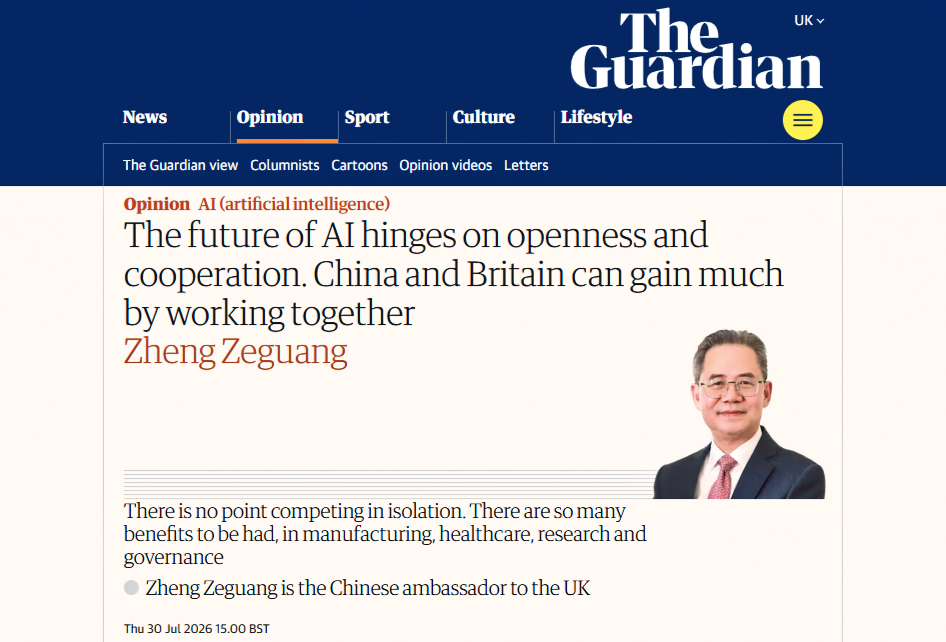
On 30 July 2026, an article by Chinese Ambassador to the UK Zheng Zeguang titled "The future of AI hinges on openness and cooperation. China and Britain can gain much by working together" was published in the British newspaperThe Guardian.
驻英使馆 2026-08-07 10:12:15
收藏资讯
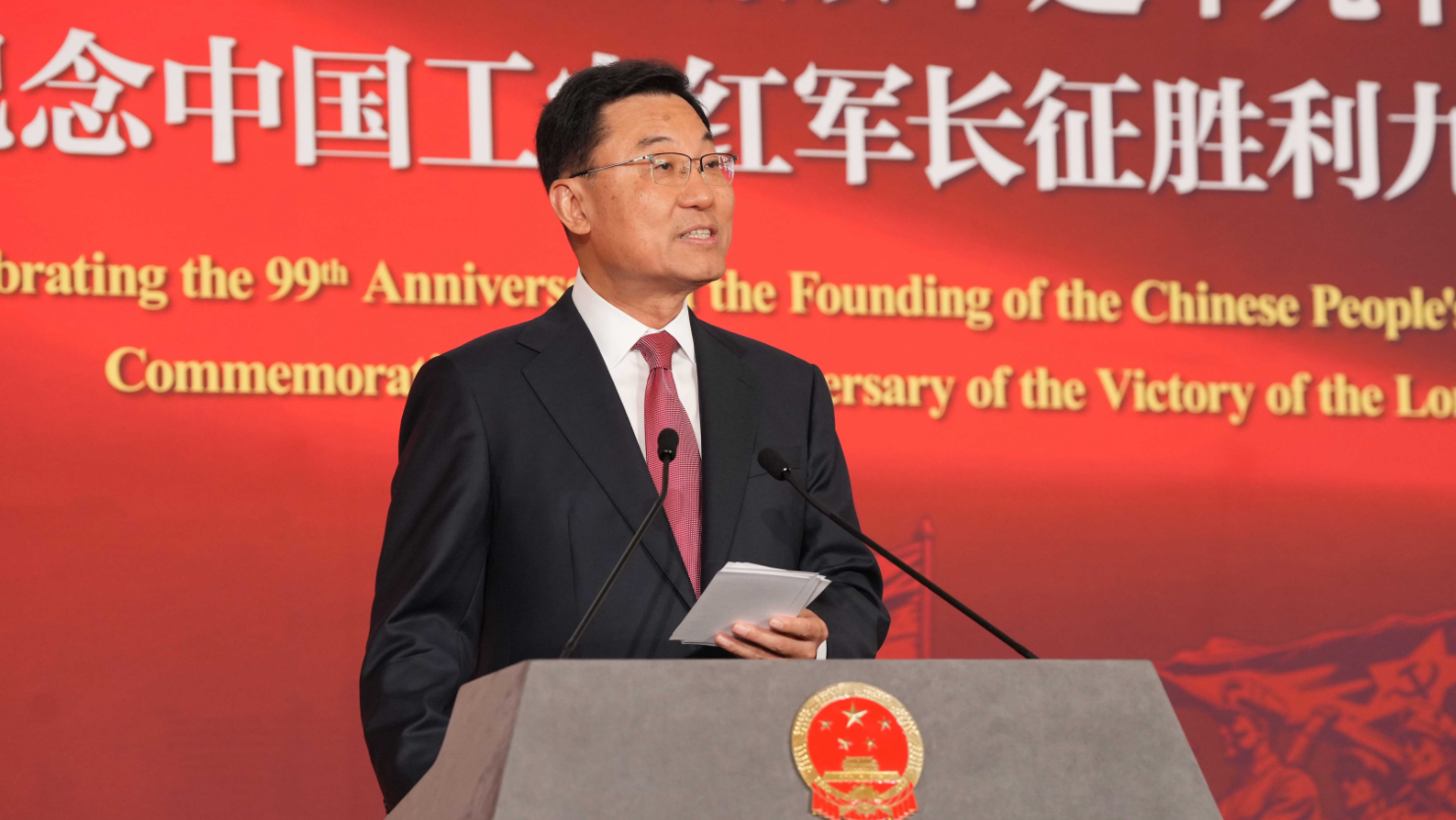
很高兴和大家齐聚一堂,共同庆祝中国人民解放军建军99周年。我谨向中国人民的子弟兵致以节日问候,向长期关心中国国防事业和中美关系发展的各界人士表示衷心感谢!
驻美使馆 2026-08-04 09:49:36
收藏资讯
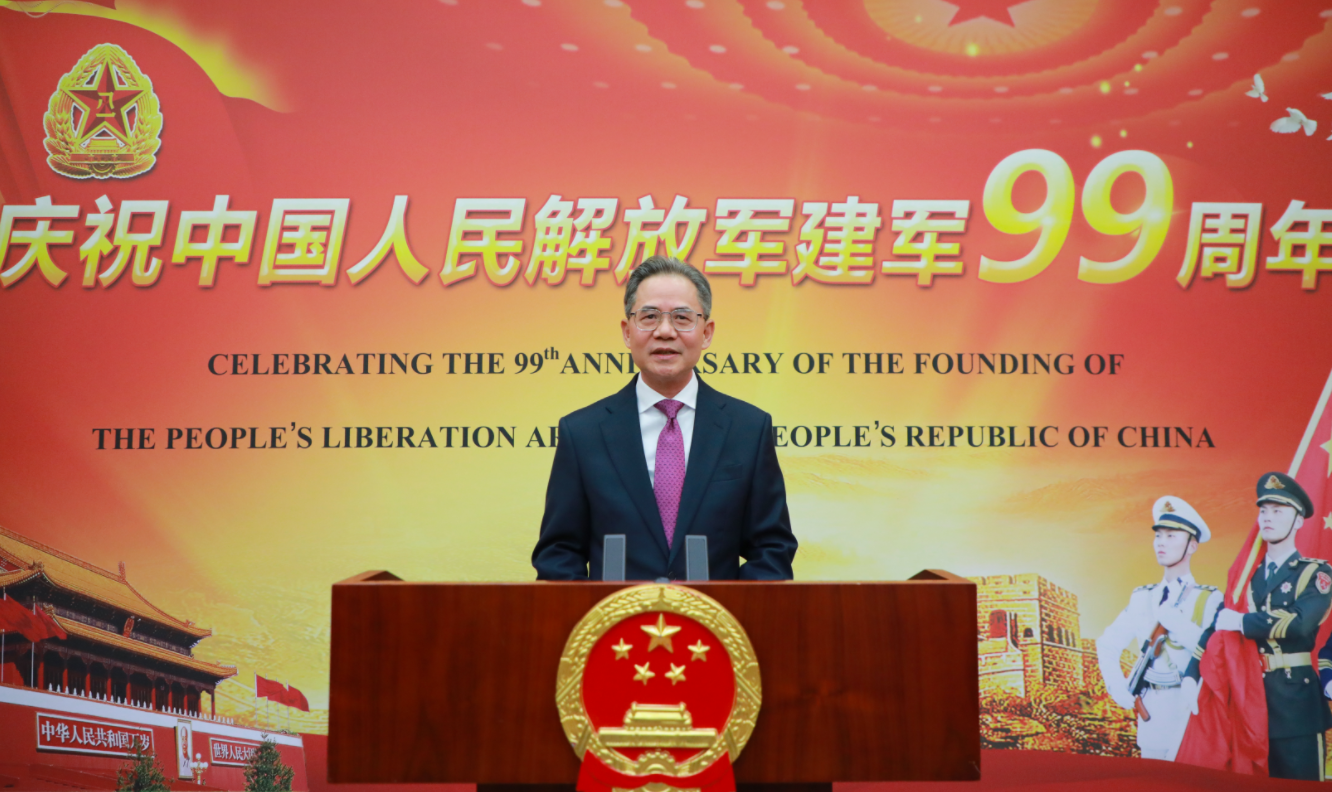
感谢各位出席今晚的招待会,与我们共同庆祝中国人民解放军建军99周年。我谨代表中国驻英国大使馆,对各位嘉宾的到来表示热烈欢迎!借此机会,我要感谢各位长期以来为推动中英关系以及中国同各位所代表国家关系发展作出的努力。
驻英使馆 2026-08-04 09:48:07
收藏资讯

微信公众号

微信小程序
 登录
登录